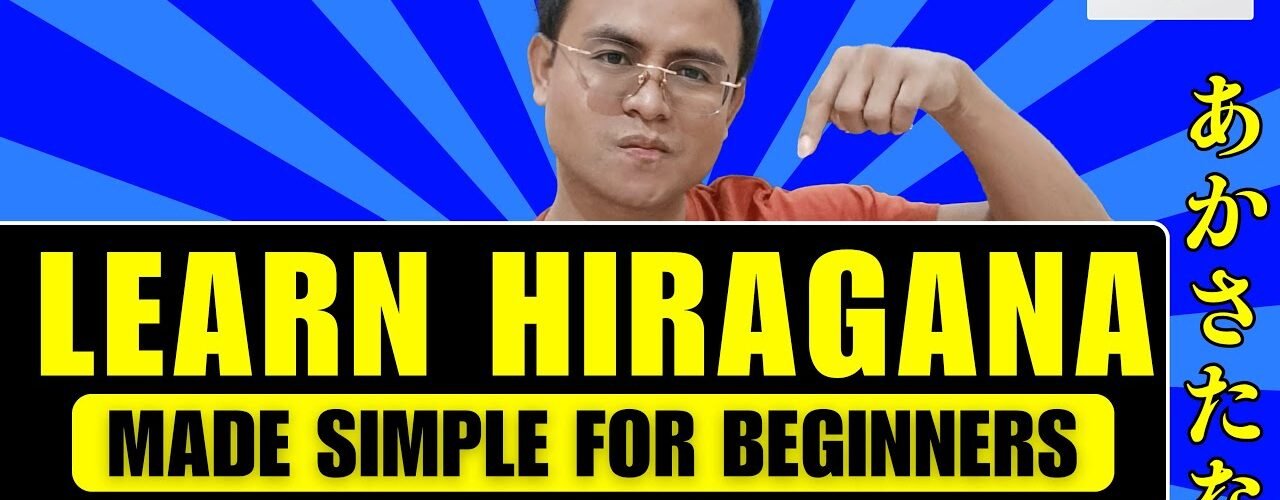
Learning Hiragana is the true beginning of Japanese.
If you can read Hiragana smoothly, grammar, vocabulary, and Kanji all become much easier.
Table of Contents
- What Is Hiragana?
- The History of Hiragana
- Why You Must Learn Hiragana First
- How Hiragana Fits Into Japanese Writing
- How to Recognize Hiragana
- How to Write Hiragana Correctly
- The 5 Japanese Vowels (A–I–U–E–O)
- Hiragana Groups (KA to N)
- Practice Tips for Faster Memorization
- Download Printable Hiragana Sheet
- Conclusion
- Q & A
What Is Hiragana?
Hiragana is one of the three Japanese writing systems:
- Hiragana (ひらがな) – soft, round characters
- Katakana (カタカナ) – sharp, angular characters
- Kanji (漢字) – complex characters borrowed from China
Hiragana is a syllabary, meaning each character represents a full sound.
There are 46 basic Hiragana characters, and once you learn them, you can read any Japanese word.
The History of Hiragana
Long ago, Japan wrote everything using Kanji, which was too formal and difficult for daily communication.
During the Heian period, Japanese women simplified Kanji into smooth, flowing curves, creating what we now call Hiragana.
It was once called “Onna-de” (women’s hand) because women used it for diaries, letters, and poetry.
Why You Must Learn Hiragana First
Hiragana is essential because it appears in every Japanese sentence:
- Grammar endings
- Verb forms
- Particles (は、へ、を)
- Native Japanese words
Even if you know Kanji, you cannot read Japanese naturally without Hiragana.
How Hiragana Fits Into Japanese Writing
A typical Japanese sentence mixes:
- Kanji – meaning ( Click here for Kanji tutorial)
- Hiragana – grammar + pronunciation
- Katakana – foreign/loan words
Example:
食べます (tabemasu)
“食” = Kanji (meaning)
“べます” = Hiragana (grammar)
How to Recognize Hiragana
| Script | Look | Use |
|---|---|---|
| Hiragana | Soft, round, flowing | Grammar, native words |
| Katakana | Sharp and angular | Foreign words |
| Kanji | Complex | Meaning |
How to Write Hiragana Correctly
All Hiragana follow these rules:
- Write top → bottom
- Write left → right
- Use smooth, curved strokes
The 5 Japanese Vowels
The foundation of all Japanese sounds:
あ (a) — ah
い (i) — ee
う (u) — oo
え (e) — eh
お (o) — oh
Hiragana Groups (KA → N)
KA-Group
か、き、く、け、こ
SA-Group
さ、し、す、せ、そ
TA-Group
た、ち、つ、て、と
NA-Group
な、に、ぬ、ね、の
HA-Group
は、ひ、ふ、へ、ほ
MA-Group
ま、み、む、め、も
YA-Group
や、ゆ、よ
RA-Group
ら、り、る、れ、ろ
WA & N
わ、を、ん
Practice Tips
- Write one row per day.
- Say each sound aloud while writing.
- Use children’s books or simple Hiragana-only texts.
- Focus on patterns instead of memorizing isolated shapes.
Download Printable Hiragana Sheet
If you want the Hiragana Starter Sheet (PDF/Word) with all 46 characters, stroke orders, and practice rows, just tell me:
“Yes, create the Hiragana sheet.”
Conclusion
Once you master Hiragana:
- You can read any Japanese word
- You understand grammar better
- Pronunciation becomes natural
- Kanji becomes easier
Hiragana is the rhythm and heart of the Japanese language.
Q & A — Frequently Asked Questions
1. How long does it take to learn Hiragana?
Most learners master it within 7–14 days.
2. Should I learn Hiragana before Katakana?
Yes. Hiragana is the foundation of all Japanese reading and writing.
3. Is Hiragana used every day in Japan?
Yes. Native speakers use Hiragana constantly in all forms of writing.
4. Why does “を (wo)” sound like “o”?
In modern Japanese, it is always pronounced as “o” when used as a particle.
5. What is the fastest way to learn Hiragana?
Write it by hand while saying the sounds out loud. That creates muscle memory, visual memory, and audio memory at the same time.









Add comment