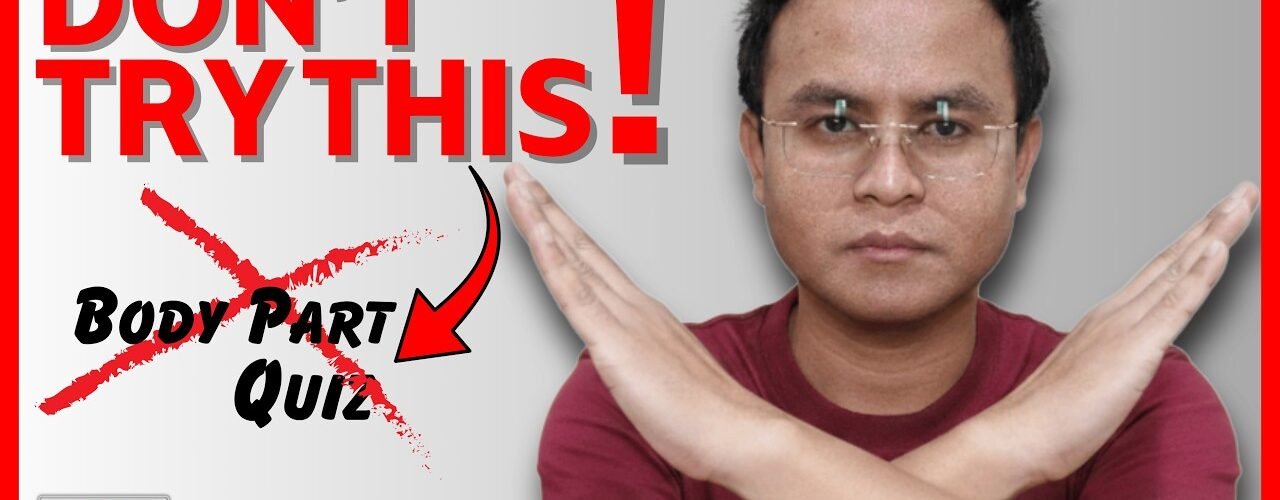
Only 5% of Japanese learners can name all 15 body parts correctly. Are you in that top tier? This quiz will test your knowledge across beginner, intermediate, and advanced levels to see where you stand.
Table of Contents
- Beginner Level (1-5)
- Intermediate Level (6-10)
- Advanced Level (11-15)
- Check Your Score
- Frequently Asked Questions
Beginner Level: The Basics
If you are just starting your Japanese journey, these five words are essential for daily conversation.
- 1. Atama (Head): A super basic word. Example: Atama ga itai (My head hurts).
- 2. Te (Hand): Often used with directions, such as Migi te (Right hand).
- 3. Me (Eye): This uses a simple Kanji. Example: Me ga ookii (Big eyes).
- 4. Kuchi (Mouth): Used in phrases like Kuchi wo akeru (Open your mouth) or Iriguchi (Entrance).
- 5. Ashi (Foot/Leg): Refers to the lower limbs. Example: Ashi ga hayai (Fast runner).
Intermediate Level: Getting Trickier
Scoring at least three out of five here means you are doing well. These words are vital for describing physical sensations or accessories.
- 6. Mimi (Ear): Used when you cannot hear or have an earache (Mimi ga itai).
- 7. Hana (Nose): You might hear Hana ga takai (High nose bridge) or Hanamizu (Runny nose).
- 8. Kata (Shoulder): Commonly used when discussing Kata ga itai (Shoulder pain).
- 9. Ude (Arm): Used to describe physical strength, such as Ude ga tsuyoi (Strong arms).
- 10. Yubi (Finger): Related to the word Yubiwa (Ring).
Advanced Level: For Serious Learners
This is where most people fail. Mastering these five words separates beginners from advanced students.
- 11. Hiza (Knee): Useful for phrases like Hiza wo tsuku (To kneel down).
- 12. Senaka (Back): This word often trips people up. Example: Senaka ga itai (Back pain).
- 13. Kubi (Neck): Kubi wo furu means to shake your head.
- 14. Mune (Chest): Often used in medical contexts like Mune ga itai (Chest pain).
- 15. Kao (Face): A common daily verb pairing is Kao wo arau (Wash your face).
How Did You Do?
Check your total points out of 15 to see your official level:
| Score | Level |
|---|---|
| 0 – 5 Points | Beginner |
| 6 – 10 Points | Intermediate |
| 11 – 15 Points | Advanced |
Q&A: Japanese Body Parts
Q: What does “itai” mean in these examples?
A: In many of the examples provided (like Atama









Add comment